Research

My research is about planet formation and protoplanetary disks. I approach it with numerical simulations. Below are the projects I’m working on now, followed by earlier ones. For a complete list of papers, see Publications.

A magnetic activation threshold for winds in the inner protoplanetary disk
MPIA, Heidelberg, Germany. Supervised by Dr. Mario Flock.

...
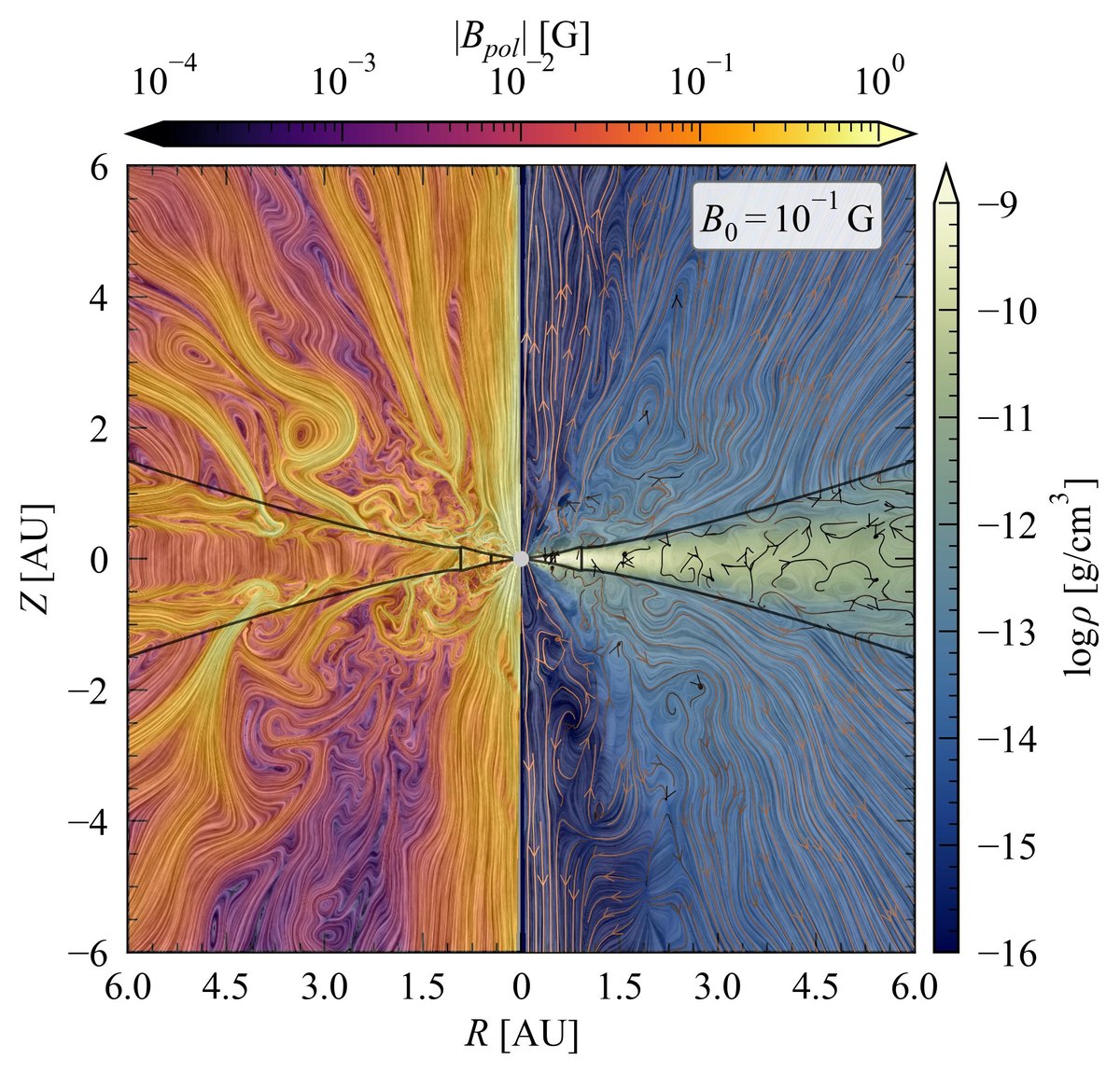
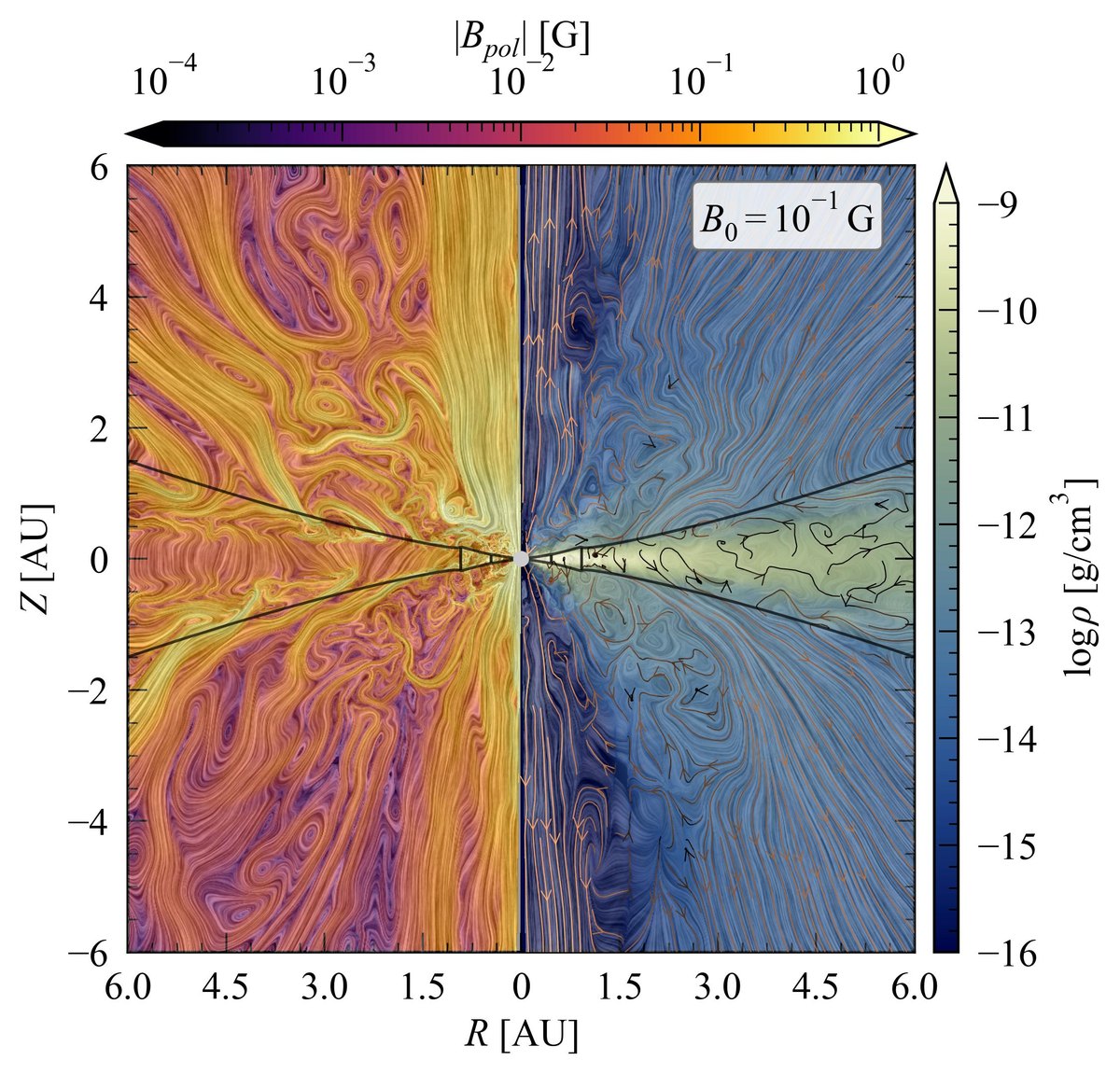
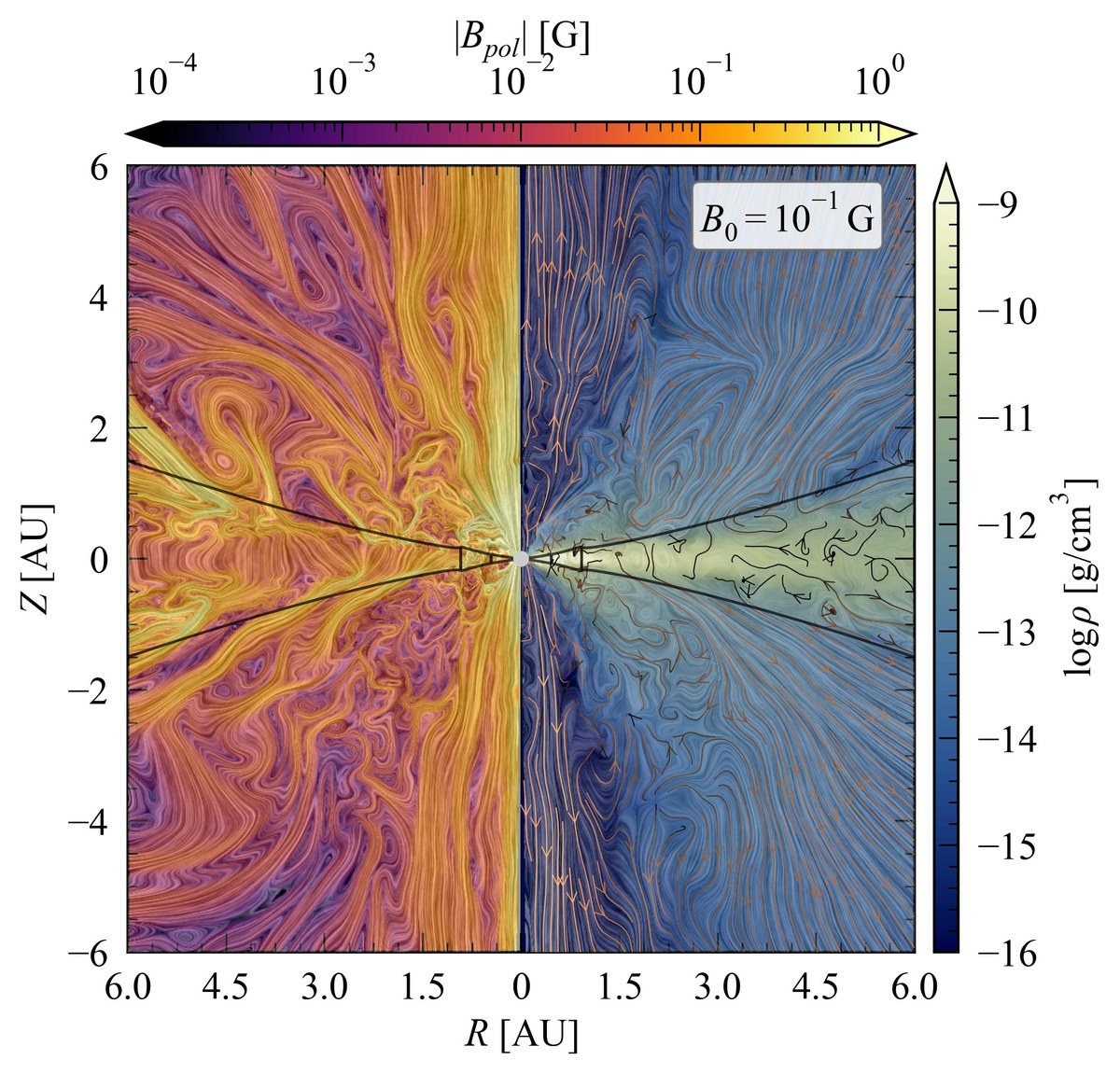
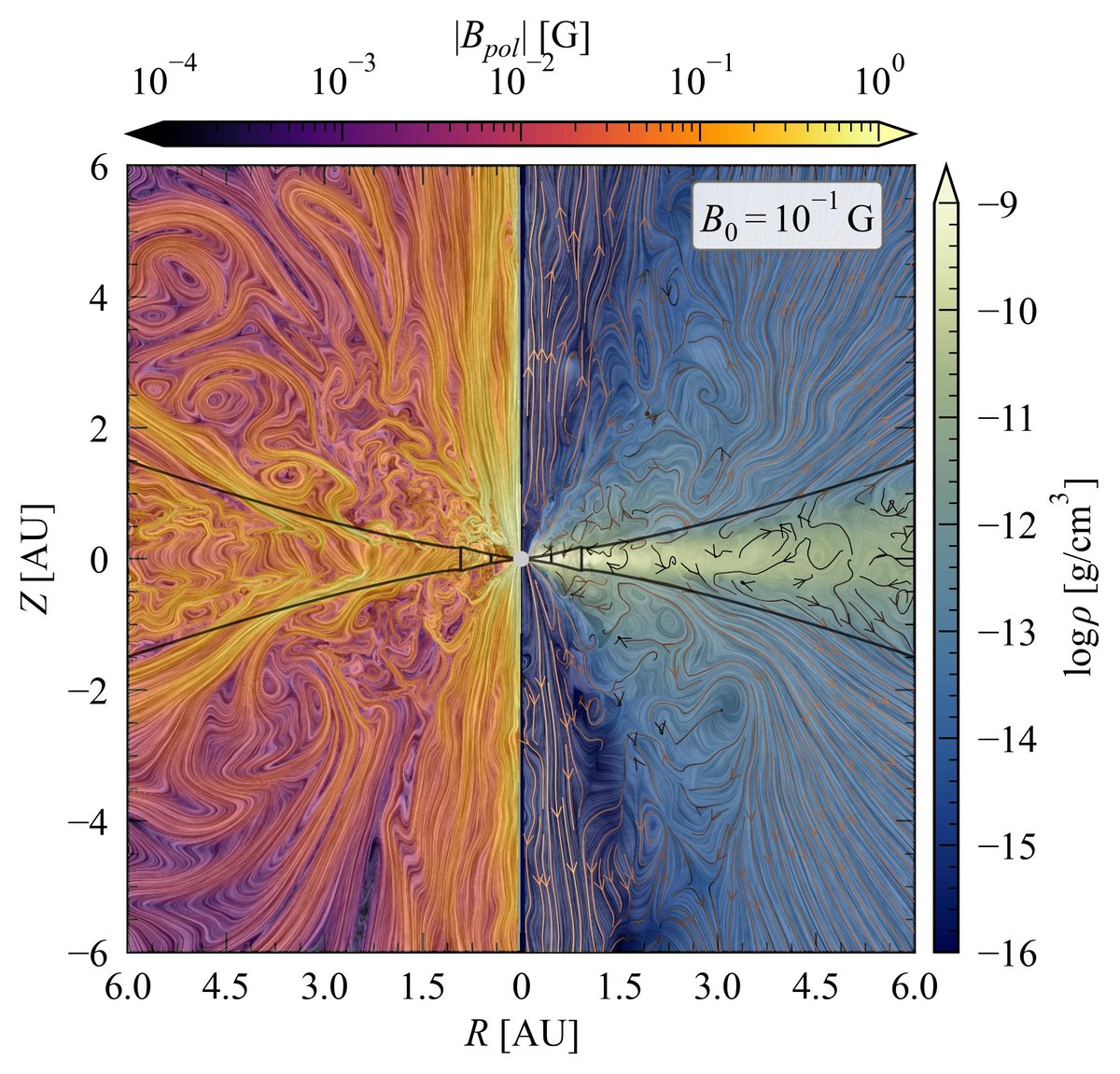
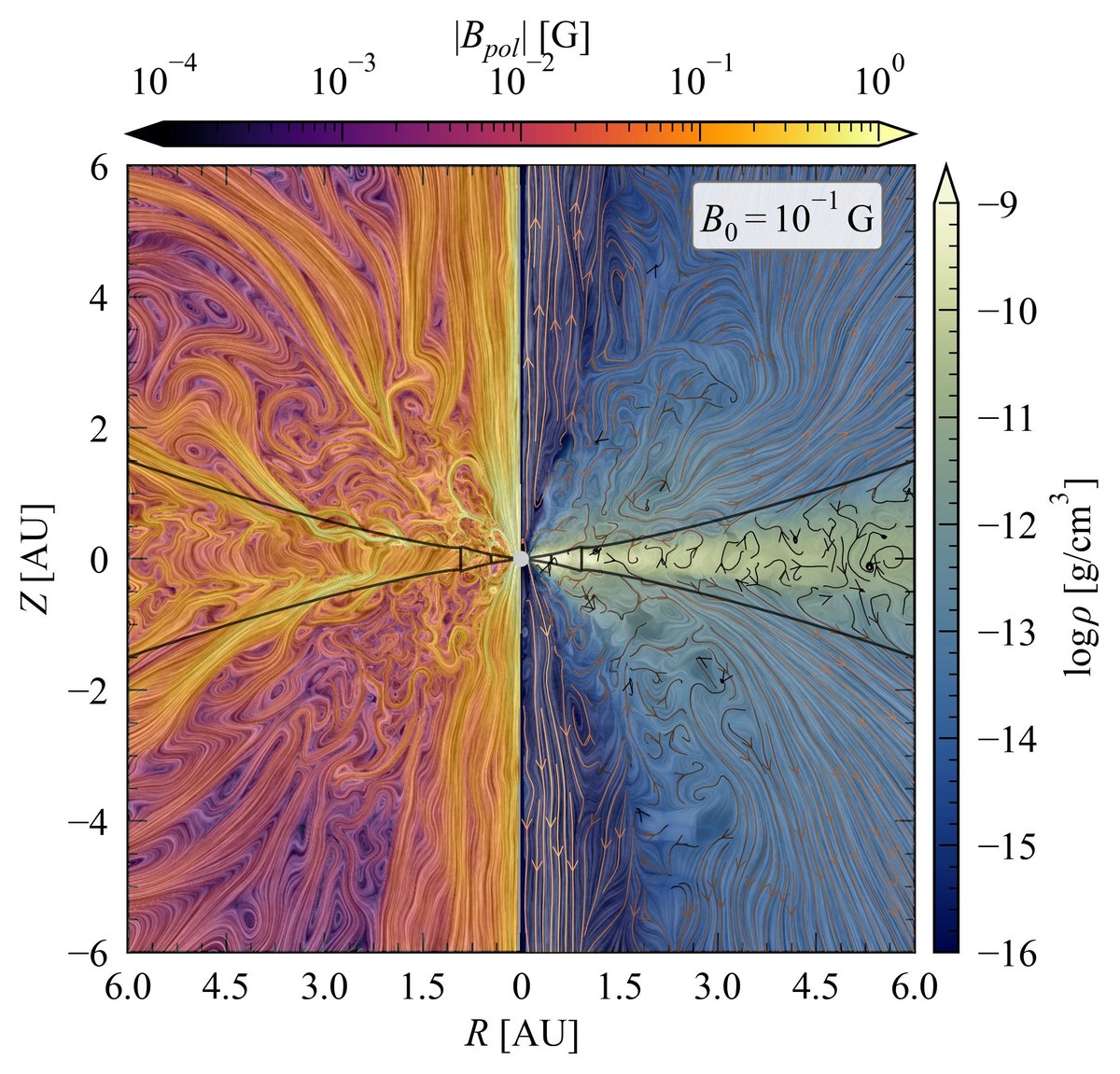
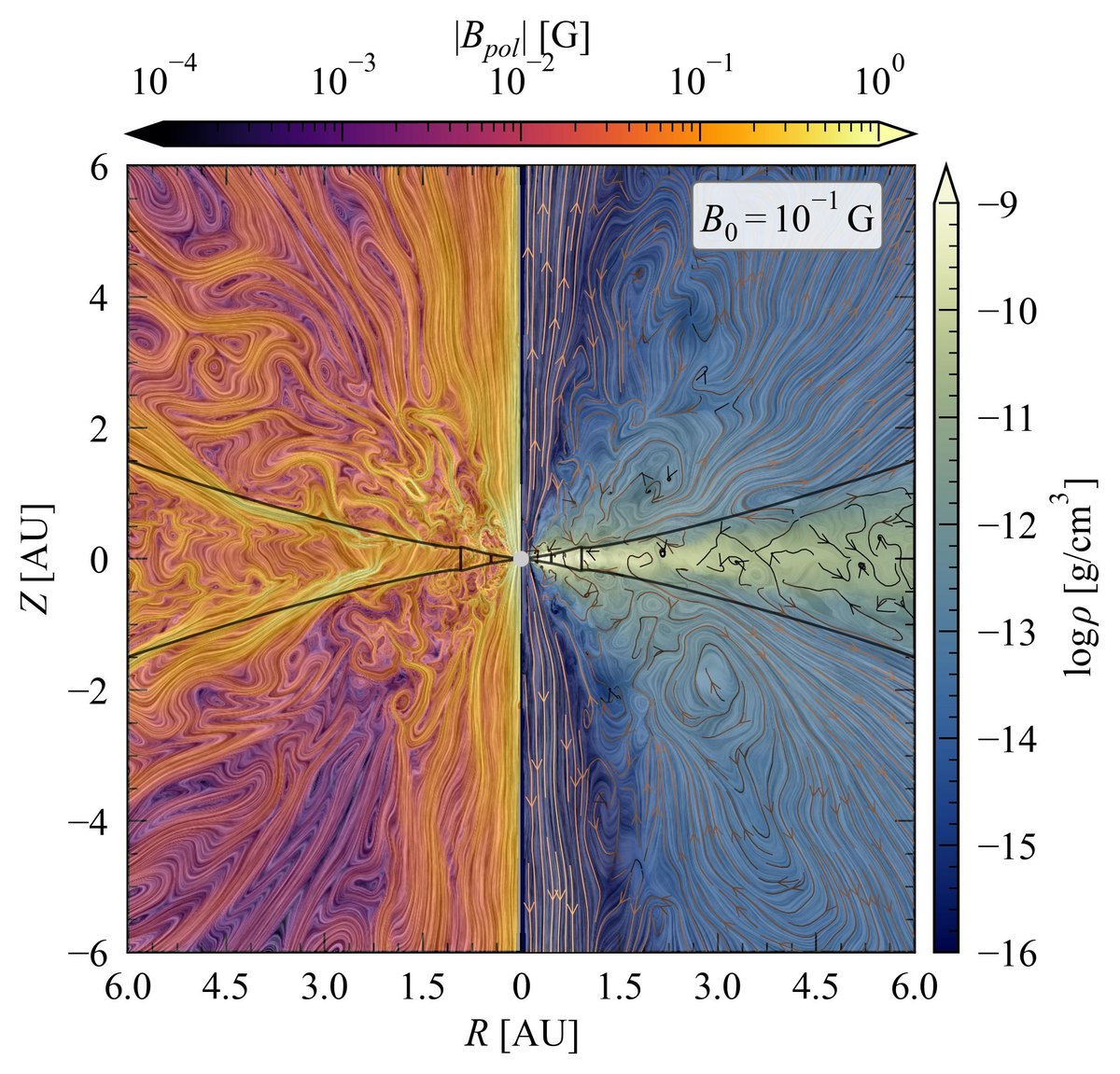
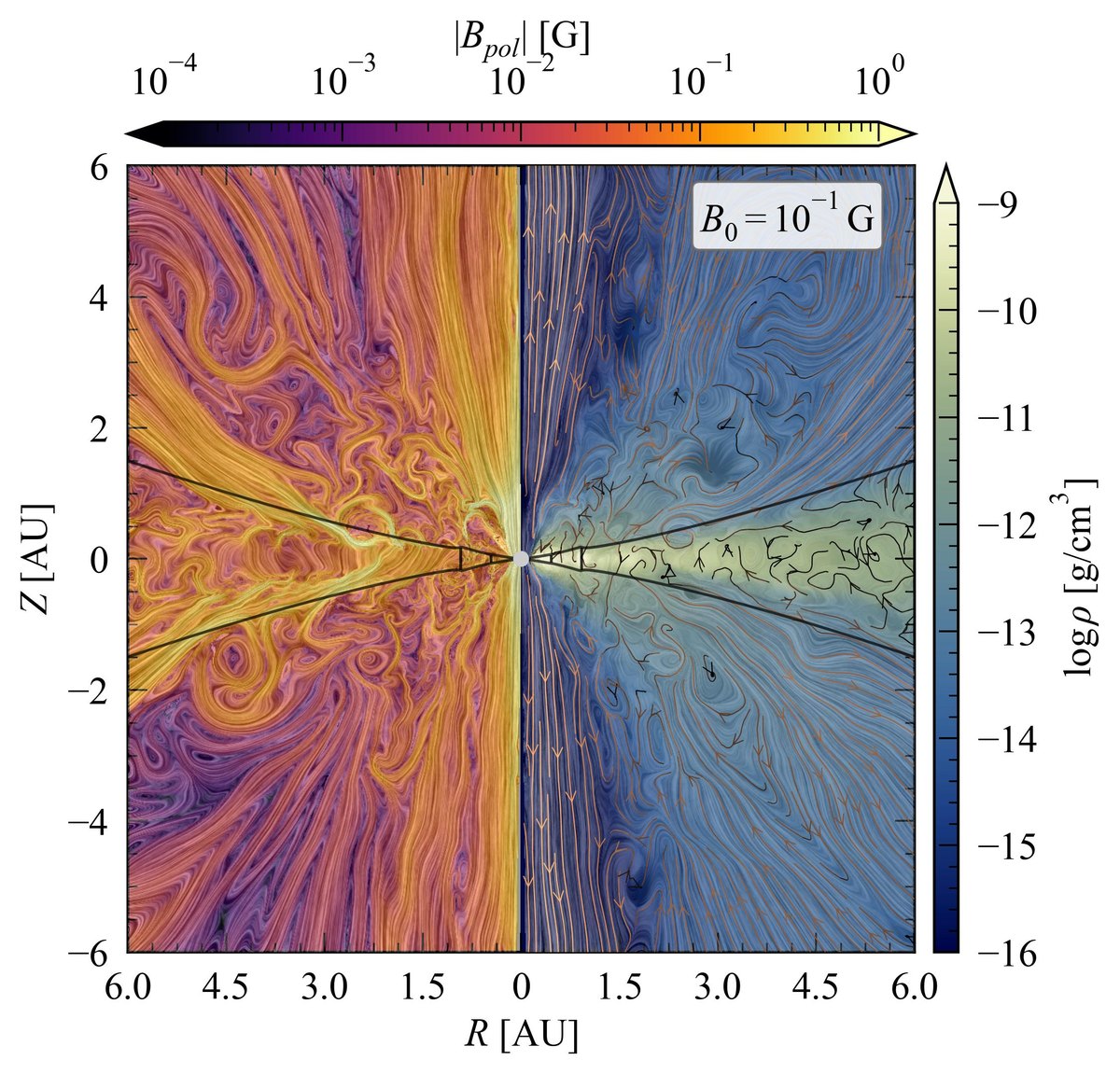
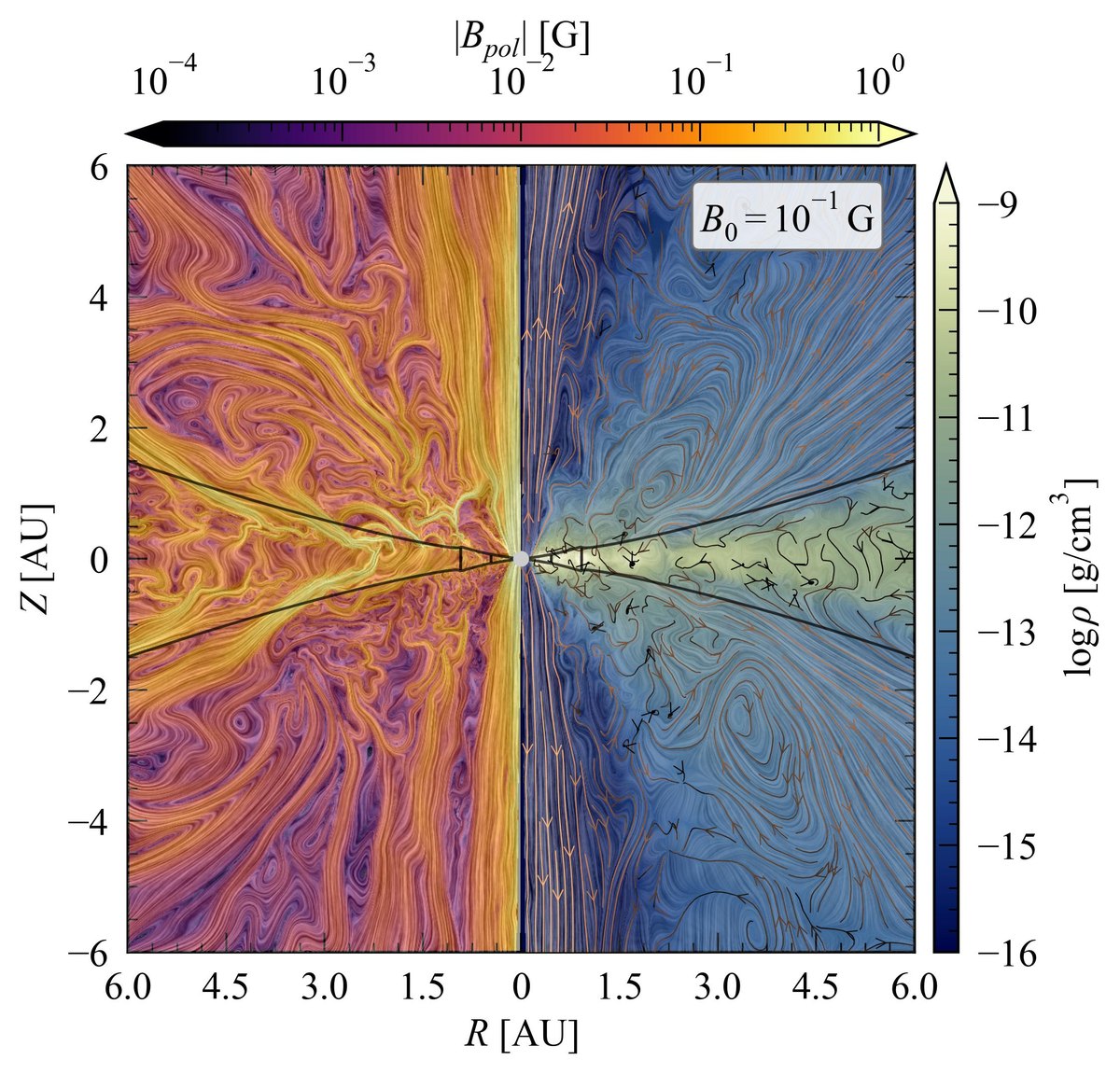
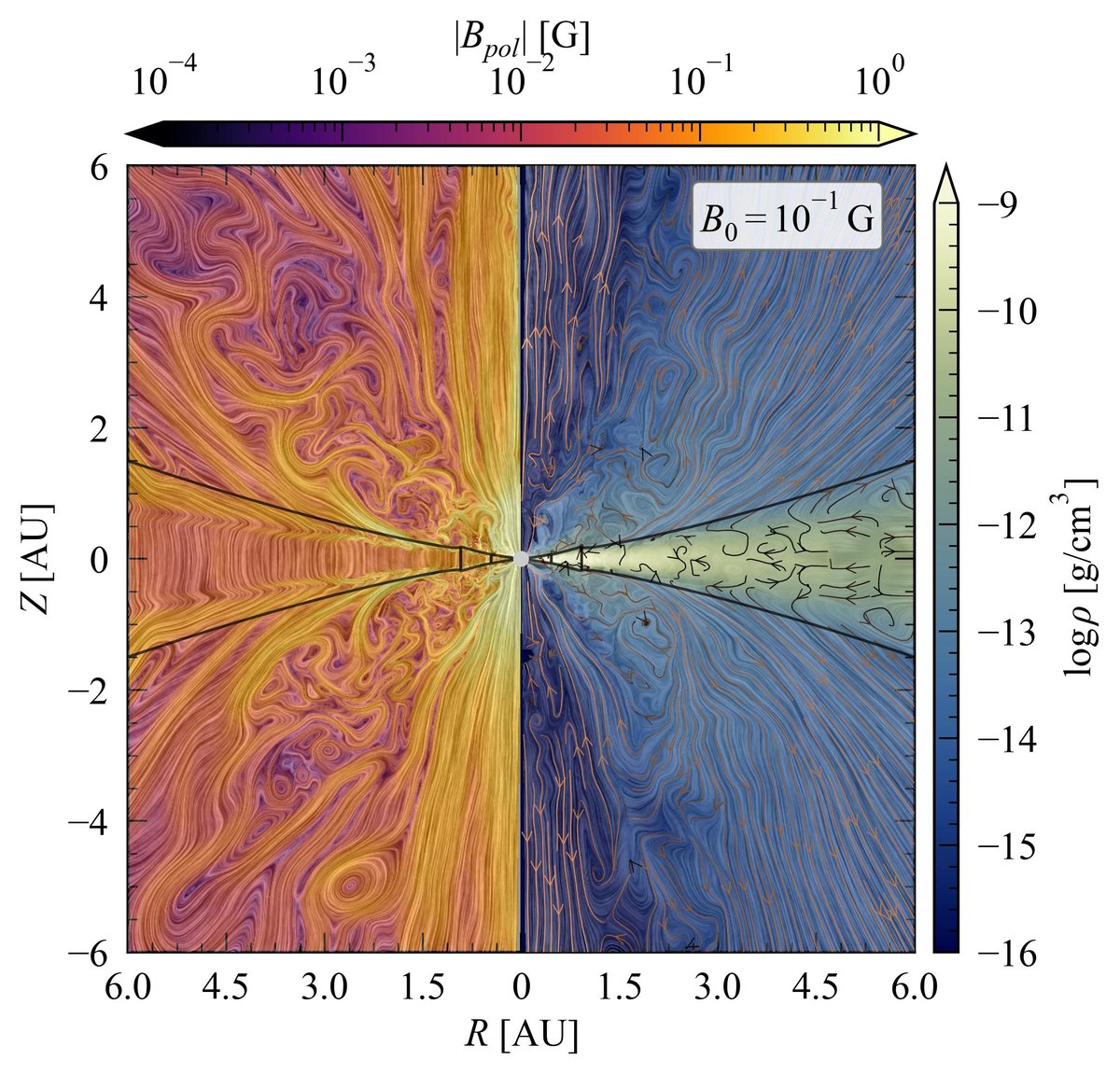
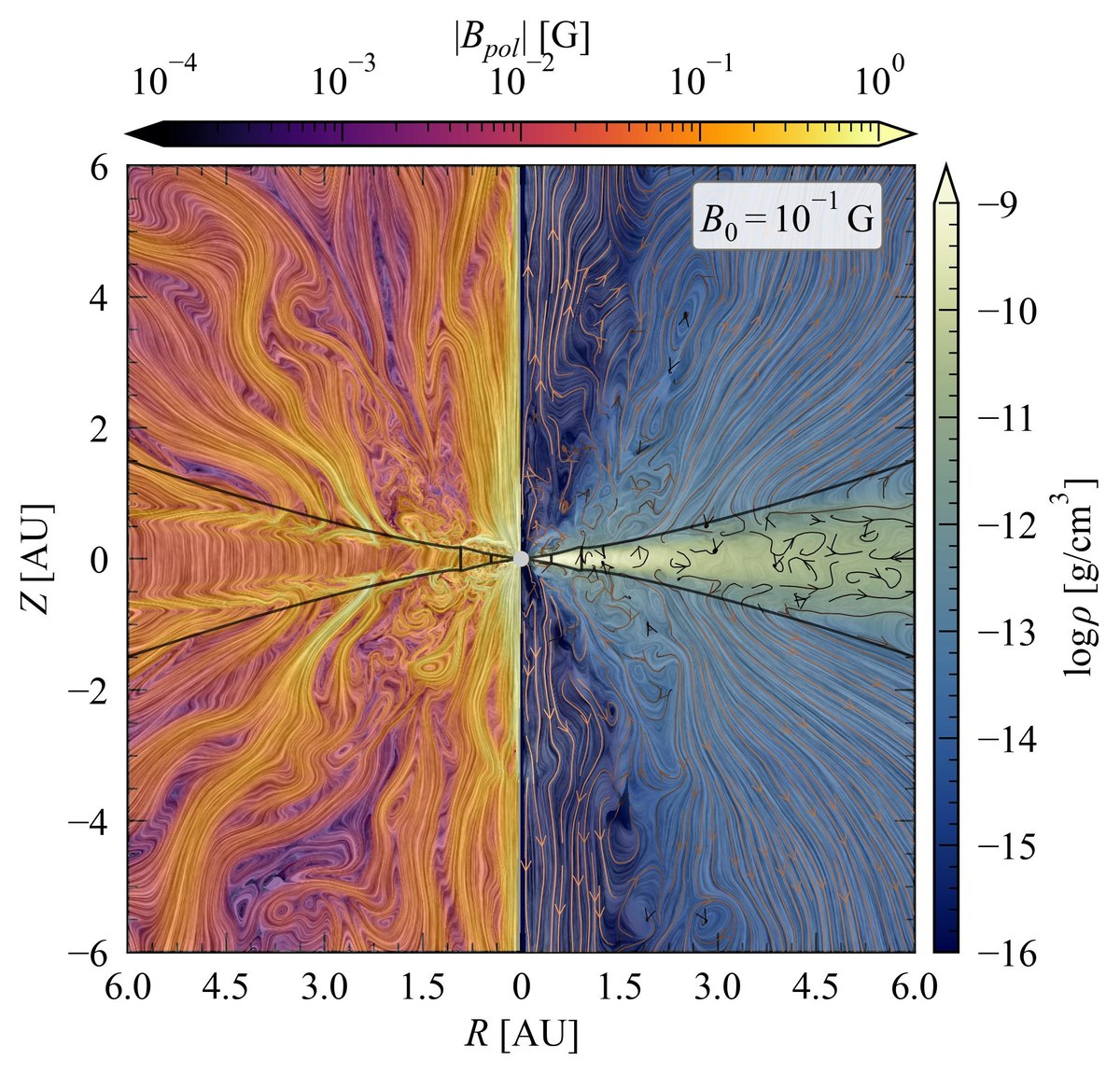
Press play or drag the slider to see how the poloidal magnetic field (left) and protoplanetary disk density (right, smeared out along the poloidal velocity) evolves over time.

Magnetic fields generally do not affect the motion of fluids in our everyday lives. However, the inner regions of protoplanetary disks (including the region where Earth is located today) reach high temperatures of up to several thousand Kelvin, causing the material to become partially ionized and form a plasma. As a result, the omnipresent magnetic fields interact with the disks, which has a decisive impact on the evolution of the disk and the future planets.

Using non-ideal MHD simulations with the PLUTO code, I am investigating how protoplanetary disks respond to different magnetic fields and how magnetic winds and magnetic flux differ. A novel approach is that, instead of simple power-law assumptions for the temperature profile, I use a realistic temperature profile inspired by radiative transfer simulations. These differ in particular in the region of the disk’s condensation front and produce significant differences in disk evolution.

We found that the magnetic wind is activated above a certain magnetic field strength and that the disk atmosphere can be divided into three dynamically distinct regions Bahrenberg et al. (in prep.)
Predicting exoplanet interiors more accurately

German Aerospace Center (DLR), Berlin, Germany. Supervised by Dr. Nicola Tosi.

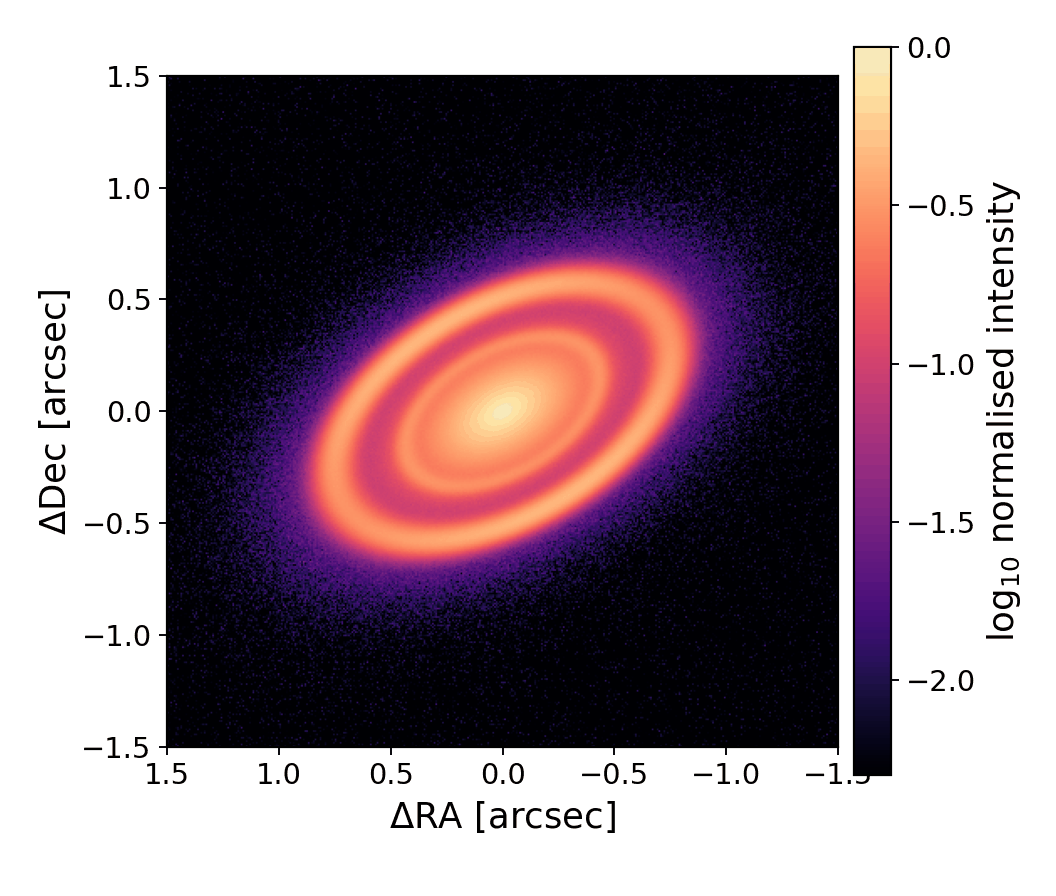
Inclined disc image on a logarithmic colour scale, showing a bright centre and two bright rings separated by a darker gap.
Placeholder figure with synthetic data. Images and maps look best with a perceptually uniform colour map such as magma or viridis.

Even though several thousand exoplanets have already been detected, in most cases only their mass and radius can be determined. Despite this limited information, it is possible to make statistical inferences about the planets’ internal composition. To this end, ExoMDN was developed, a neural network that was trained on millions of synthetic planets whose internal structure is known. I improved the atmospheric model of these synthetic planets and demonstrated that the new model results in significant differences in the mass-radius relationship. This paves the way for a more realistic assessment of the internal structure of exoplanets as part of the future PLATO mission (ESA).

The results of this work were presented at the European Geosciences Union, Vienna, Austria in 2025 (Baumeister, Bahrenberg et al. 2025).

Simulating how warped protoplanetary disks occur in observations

Institute for Theoretical Astrophysics, Heidelberg University, Germany. Supervised by Prof. Dr. Kees Dullemond.

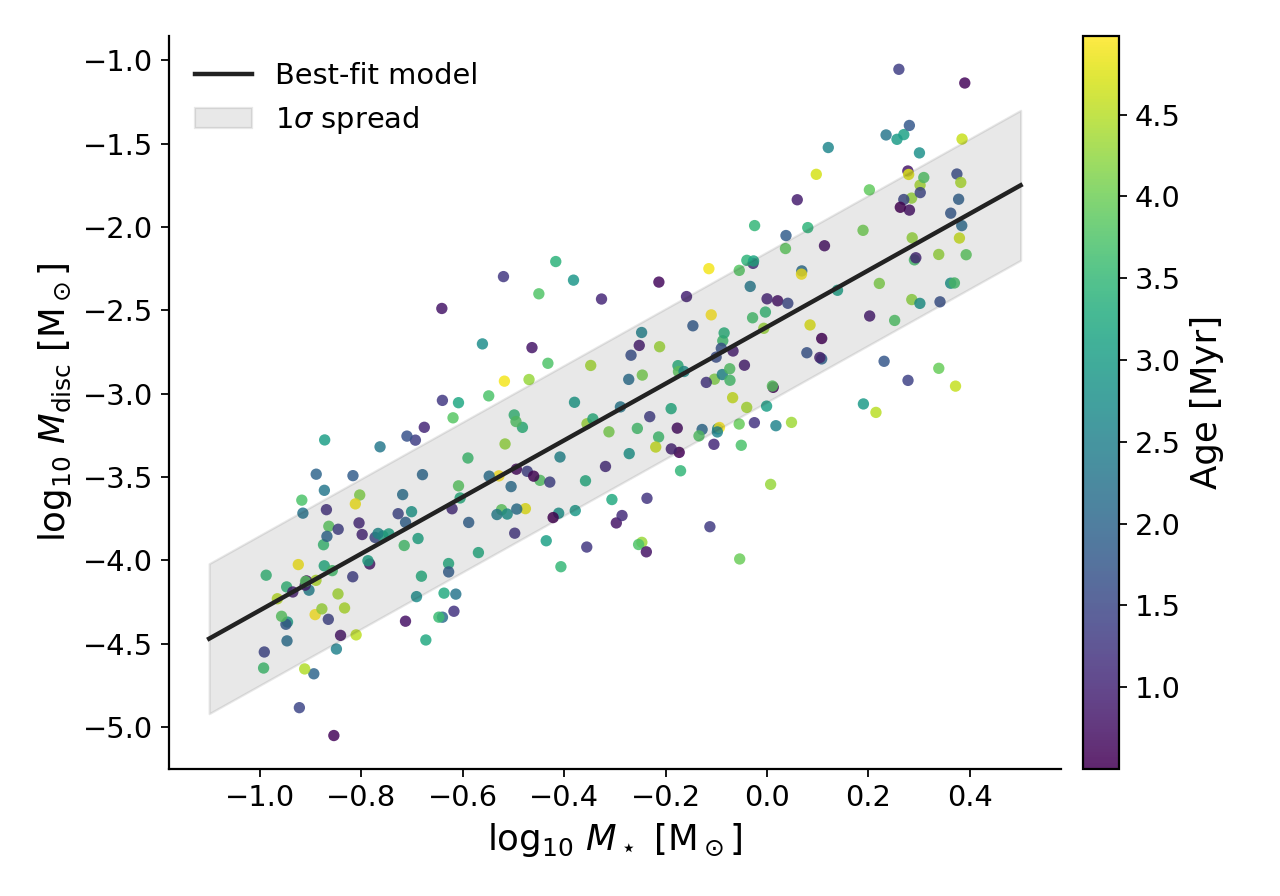
Scatter plot of disc mass against stellar mass for about 260 objects coloured by age, with a best-fit line and shaded one-sigma band.
Radiative transfer scattered light simulations of a warped protoplanetary disk showing light and shadow patterns from different obseravtional angles.

Although often referred to as protoplanetary disks, many observations reveal significant deviations from a disk-like structure. One example are so-called “warped disks,” in which the inner and outer regions are misaligned but smoothly connected. This can result, for example, from embedded, inclined planets, stellar flybys, or strong magnetic fields at the inner edge. Scattered light observations reveal impressive interplay of light and shadow, depending on the exact shape of the object. I performed Monte Carlo radiative transfer simulations with RADMC-3D to produce synthetic images of several disk geometries, which allows us to trace the disk structure back from observed shadows. Furthermore, and for the first time, I combined hydrodynamic and radiative transfer simulations of the evolution of warped disks to predict how disks would evolve over time in observations.

The hydrodynamical disk evolution was computed with dwarpy (Kimmig, Dullemond, Bahrenberg, in prep.).